Choosing a driveway material probably isn’t the most glamorous item on your weekend to-do list. I mean, unless you are the kind of person who gets excited about curb appeal and drainage patterns, in which case: respect. But for the rest of us, this is one of those decisions that can quietly make a big difference in your home’s look, feel, and long-term maintenance budget.
If you are comparing chip n seal vs asphalt, you are likely trying to solve the age-old homeowner puzzle: How do I get a driveway that looks good, lasts long enough, and doesn’t require me to sell a kidney? The good news is that both options can work beautifully. The slightly less exciting news is that they do very different things, and one may suit your property far better than the other.
What Is Chip-N-Seal?
Chip-n-seal, sometimes called tar and chip, is a driveway surface made by applying liquid asphalt and then covering it with stone chips. Think of it as asphalt’s more rugged, outdoorsy cousin. Less polished, more practical, and perfectly fine getting a little dirt on its boots.
The process starts with a prepared base that is graded and compacted. Hot liquid asphalt is then sprayed or spread over the surface, followed by small stone chips that are rolled into place. Once everything sets, the loose excess stone is swept away, and the driveway is ready to do its job.
For homeowners comparing chip n seal vs asphalt, chip-n-seal is often the more affordable and rustic-looking choice. It is commonly used on rural roads, farm lanes, private drives, and long residential driveways where function and cost matter a lot.
What Is Asphalt?
Asphalt is one of the most common driveway materials used for homes, roads, and parking lots. It is made from aggregates, sand, and a liquid asphalt binder. When installed correctly, an asphalt driveway creates a smooth, strong, and clean-looking surface that says, “Yes, this home has its life together.”
The installation process includes preparing the base, laying hot mix asphalt, and compacting it with a roller. The result is a seamless paved surface that hardens as it cools. Homeowners often compare chip n seal vs asphalt because asphalt offers a more polished finish and is usually the driveway option that shows up in the neighborhood wearing a tailored suit.
A well-installed asphalt driveway has a dark black or charcoal color that looks neat and professional. For suburban and modern homes especially, asphalt is often the preferred choice because it combines curb appeal with reliable performance.
Chip N Seal vs Asphalt Cost Comparison
When homeowners compare chip n seal vs asphalt, cost is usually the first thing that claps its hands and jumps into the conversation. And fair enough. Driveways are important, but they are not usually the kind of purchase you want to make like you have unlimited cash and zero responsibilities.
Chip-n-seal driveway cost
A chip-n-seal driveway is generally less expensive to install than asphalt. Because it uses less asphalt material and relies on stone chips for the surface layer, total installation costs are usually lower. That makes chip-n-seal a popular option for homeowners who want to keep the bill from becoming emotionally aggressive.
Asphalt driveway cost
An asphalt driveway usually costs more upfront. It requires a thicker asphalt layer and a more involved installation process. Pricing varies based on location, driveway size, and base preparation, but asphalt typically comes with a higher price tag than chip-n-seal.
Which driveway option is more budget-friendly?
In most cases, chip-n-seal is the more budget-friendly choice. If your main goal is to keep upfront expenses low, chip-n-seal may be the better fit. That said, many homeowners still compare chip n seal vs asphalt carefully because asphalt may offer better long-term value in certain situations.
Long-term maintenance costs
Chip-n-seal may require more frequent touch-ups over time, especially if the driveway sees heavy traffic or rough weather. Loose stone chips may need to be replaced occasionally, which is not exactly a thrilling Saturday project, but here we are.
Asphalt usually has higher upfront costs, but it may offer lower maintenance in the early years if installed well. Asphalt driveways still need periodic sealing, crack repair, and general upkeep to stay in good shape.
Best option for tight budgets
If budget is your top concern, chip-n-seal is often the smarter choice. It can provide a durable surface at a lower initial cost. However, if you want a smoother look and are willing to spend more upfront, asphalt may be worth the investment.
Chip N Seal vs Asphalt Durability
Durability is another major factor when comparing chip n seal vs asphalt. A driveway needs to handle traffic, weather, and daily use without throwing a dramatic tantrum every few seasons.
How chip-n-seal driveway surfaces hold up
Chip-n-seal can perform well on low- to moderate-traffic driveways. It offers good durability for many residential uses, but it is usually not as strong as asphalt. Over time, the chips may loosen, and the surface can wear faster in high-traffic areas.
How asphalt driveways hold up over time
Asphalt is known for strong long-term performance. It handles regular vehicle traffic well and tends to resist wear better than chip-n-seal when maintained properly. Homeowners often choose asphalt because they want a driveway that stays stable for many years without behaving like a moody teenager.
Weather and traffic resistance
Both surfaces can be affected by climate. In areas with freeze-thaw cycles, heavy rainfall, or intense sun, both chip-n-seal and asphalt may deteriorate faster without maintenance. In many cases, asphalt performs better against weather and traffic stress, which is why it is often preferred for driveways with higher use.
Maintenance for chip-n-seal and asphalt
Chip-n-seal may need re-chipping or patching as the surface ages. Asphalt driveways need sealing to protect against cracking and water damage. Cracks should be repaired quickly to extend the life of the driveway.
Which driveway lasts longer?
In most cases, asphalt lasts longer than chip-n-seal. If your goal is to maximize driveway lifespan, asphalt is usually the better long-term option. Still, chip-n-seal can be a practical solution for homeowners who want a lower-cost surface and are comfortable with some upkeep.
Chip N Seal vs Asphalt Appearance
Appearance matters. A driveway may not host dinner parties, but it does have to sit out front every day and represent the household. So yes, looks count. When comparing chip n seal vs asphalt, the visual difference is easy to spot.
Chip-n-seal driveway appearance
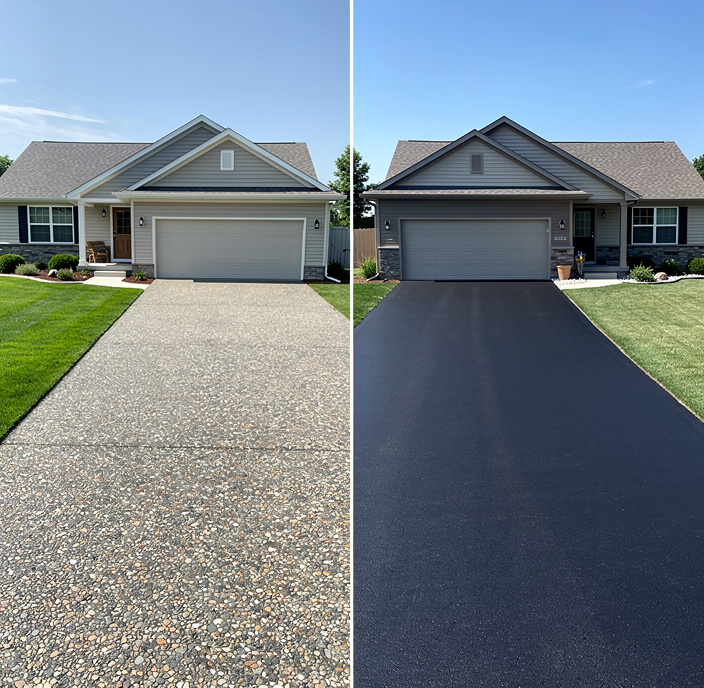
Chip-n-seal has a textured, natural look. The exposed stone chips create a rustic finish that works especially well for rural homes, large properties, and country-style settings. It is a little rougher than asphalt, but in a charming, “I know what I am about” kind of way.
Asphalt driveway appearance
Asphalt has a smooth, dark finish that looks clean and polished. A new asphalt driveway often makes a home look well maintained and updated. Its uniform surface gives it a refined appearance that many homeowners love.
Curb appeal differences
For curb appeal, asphalt is often the stronger choice. Homeowners comparing chip n seal vs asphalt often choose asphalt when they want a more modern and finished look. Chip-n-seal can still be attractive, but it tends to suit homes with a more natural or rustic style.
Which driveway style fits your home?
Chip-n-seal often looks best on farms, cabins, rural homes, and long country driveways. Asphalt usually works better on suburban homes, modern properties, and homes where a polished driveway appearance matters most.
Chip N Seal vs Asphalt Pros and Cons
Chip-n-seal pros
- Lower upfront cost
- Natural, rustic appearance
- Good for long or large driveways
Chip-n-seal cons
- Rougher surface
- Less polished look
- May need more frequent upkeep
Chip-n-seal is appealing for homeowners who want a cost-effective driveway material with a rougher, more natural style. It works especially well for long driveways where asphalt might feel like asking too much from the budget.
Asphalt pros
- Smooth finish
- Strong curb appeal
- Reliable and widely used
Asphalt cons
- Higher installation cost
- Can crack over time
- Requires sealing and maintenance
An asphalt driveway gives homes a polished appearance and dependable performance. It is a popular choice for homeowners who want long-term value and a cleaner finish.
Chip N Seal vs Asphalt: Which Is Right for Your Driveway?
The best choice depends on your priorities. When comparing chip n seal vs asphalt, there is no one-size-fits-all answer, which is slightly annoying but also kind of liberating.
Choose chip-n-seal if:
- You want a lower-cost driveway option
- You like a rustic or natural look
- Your driveway is long or large
A chip-n-seal driveway is often a smart solution for homeowners who want to save money while still getting a functional surface. It is especially useful on larger properties where installation costs matter most.
Choose asphalt if:
- You want a smoother, more finished appearance
- You are willing to pay more upfront
- You want stronger long-term performance
An asphalt driveway is usually the better choice if curb appeal and durability are top priorities. It costs more, but many homeowners feel the smoother finish and longer lifespan make it worth the expense.
Conclusion
When comparing chip n seal vs asphalt, the biggest differences are cost, appearance, and durability. Chip-n-seal is generally the more affordable driveway material and offers a rustic, textured look that works well for rural properties and large driveways. Asphalt costs more upfront, but it provides a smoother finish, better curb appeal, and often longer-lasting performance.
If you want a budget-friendly driveway option, chip-n-seal may be the right fit. If you want a more polished asphalt driveway with strong long-term value, asphalt is likely the better investment. In the end, the best driveway material is the one that matches your property, your budget, and your maintenance preferences.